A Quebec home insurance policy covers sudden and accidental damage to your roof, not its aging or lack of maintenance. This distinction determines almost all denied claims following water infiltration in Montreal.
Key points
- Water damage is the leading cause of claims in home insurance, according to the Autorité des marchés financiers.
- Basic coverage includes damage caused by plumbing fixtures or the bursting of a public water main; infiltration through the roof often requires an endorsement.
- The Civil Code of Quebec requires the insured to report any loss as soon as they become aware of it (Article 2470).
- The insurer must pay the indemnity within 60 days following receipt of the notice of loss or the requested supporting documents (Article 2473).
- A worn or neglected roof is a maintenance issue: insurance companies treat this as a homeowner expense, not a claim.
What a standard home insurance policy typically covers
Home insurance policies protect your house against a list of named perils or all risks except those specifically excluded, depending on the plan you choose. For a roof, typical covered events include windstorms that tear off shingles, hail that punctures the surface, falling trees, fire, and vandalism.
The insurer's logic comes down to one word: suddenness. Unforeseeable, one-time damage is covered. Gradual deterioration is not, even if it eventually leads to significant water infiltration.
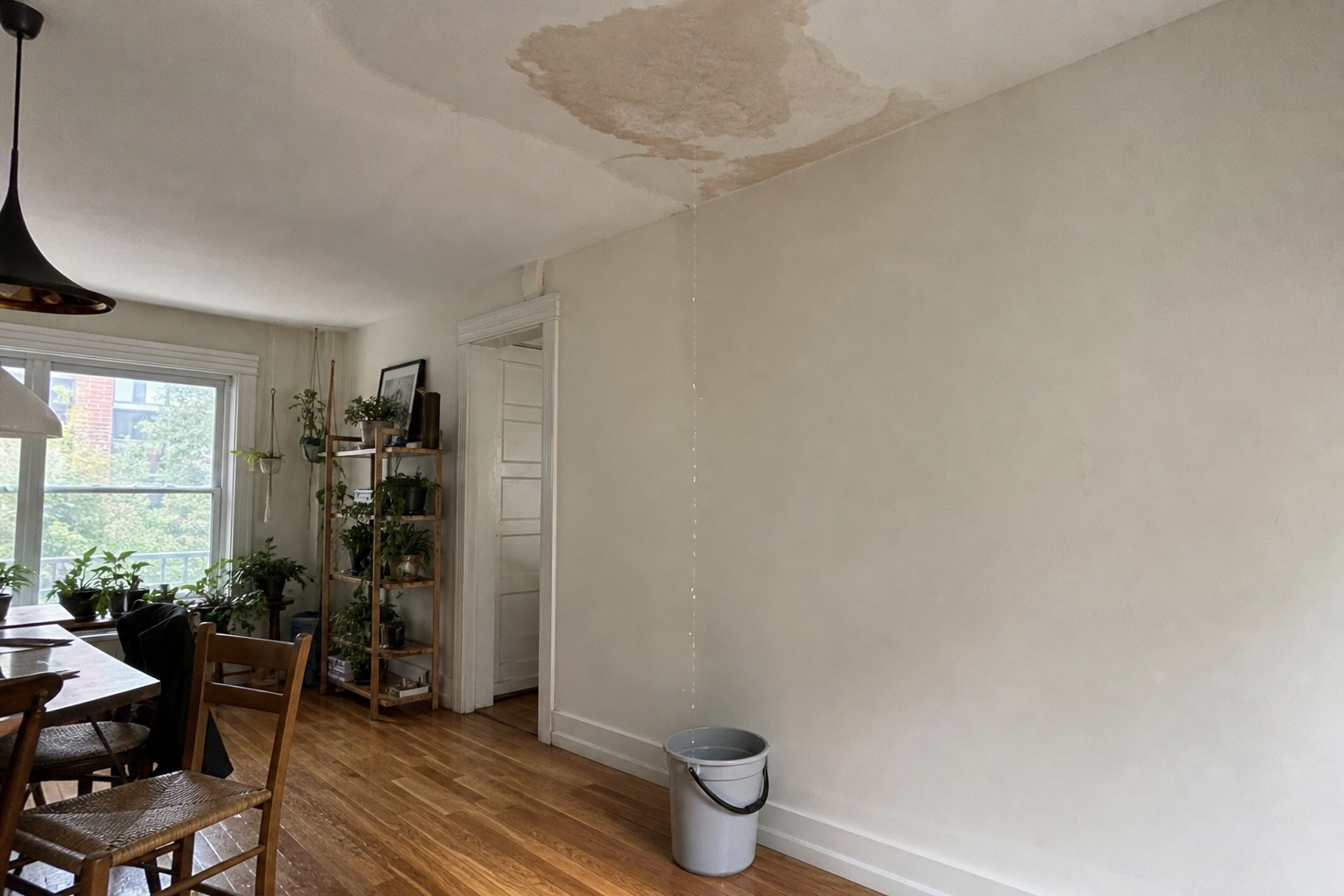
Water infiltration must be reported as soon as it is discovered.
Water damage: the most expensive gray area
Water entering through the roof is a classic point of contention. Basic coverage is intended for water coming from a plumbing system or a broken public water main. Rain or meltwater passing through a worn-out roof covering is a different story, and the Autorité des marchés financiers encourages homeowners to verify exactly what water damage coverage their insurer provides.
In practical terms, three additional coverages are often added to contracts: water infiltration through roofs and walls, sewer backup, and ground water. Each requires an endorsement and carries its own deductible. Reading the exclusions section before winter arrives is cheaper than having a claim denied after an ice dam.
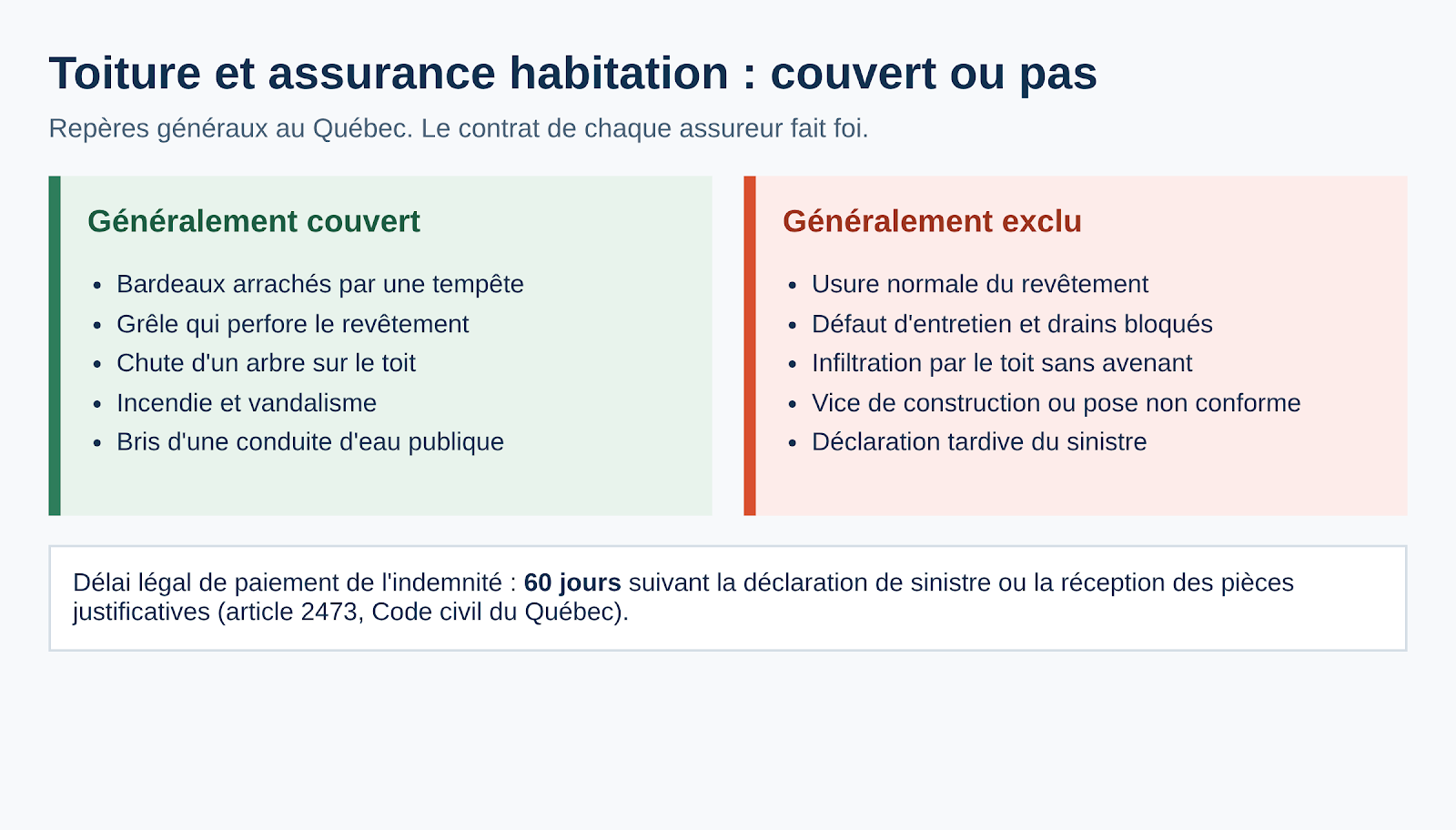
General guidelines; the specific contract from each insurer is the final authority.
Reasons for a denied roof-related claim
- Normal wear and tear: a roof covering that has reached the end of its useful life is not an insurable loss.
- Lack of maintenance: blocked gutters, loose flashing, moss buildup, clogged flat roof drains.
- Construction defect or improper installation, especially if the work was done without a licensed contractor.
- Late reporting: Article 2470 of the Civil Code allows the insurer to invoke a forfeiture clause if they suffer prejudice due to the delay.
- Damages excluded from the policy, such as certain sewer backups or water infiltrations without an endorsement.
Steps to take after roof damage
The best way for a homeowner to protect themselves involves five actions.
- Secure the area and limit damage, for example by moving belongings and collecting water.
- Photograph the roof, water stains on the ceiling, and affected items before any cleaning.
- Call the insurer immediately, as the law requires prompt reporting.
- Have a temporary emergency repair installed to stop the leak.
- Keep all invoices, including those for temporary measures, as they are part of the claim.
Our guide on roof water infiltration details useful steps to take while waiting for the roofer.
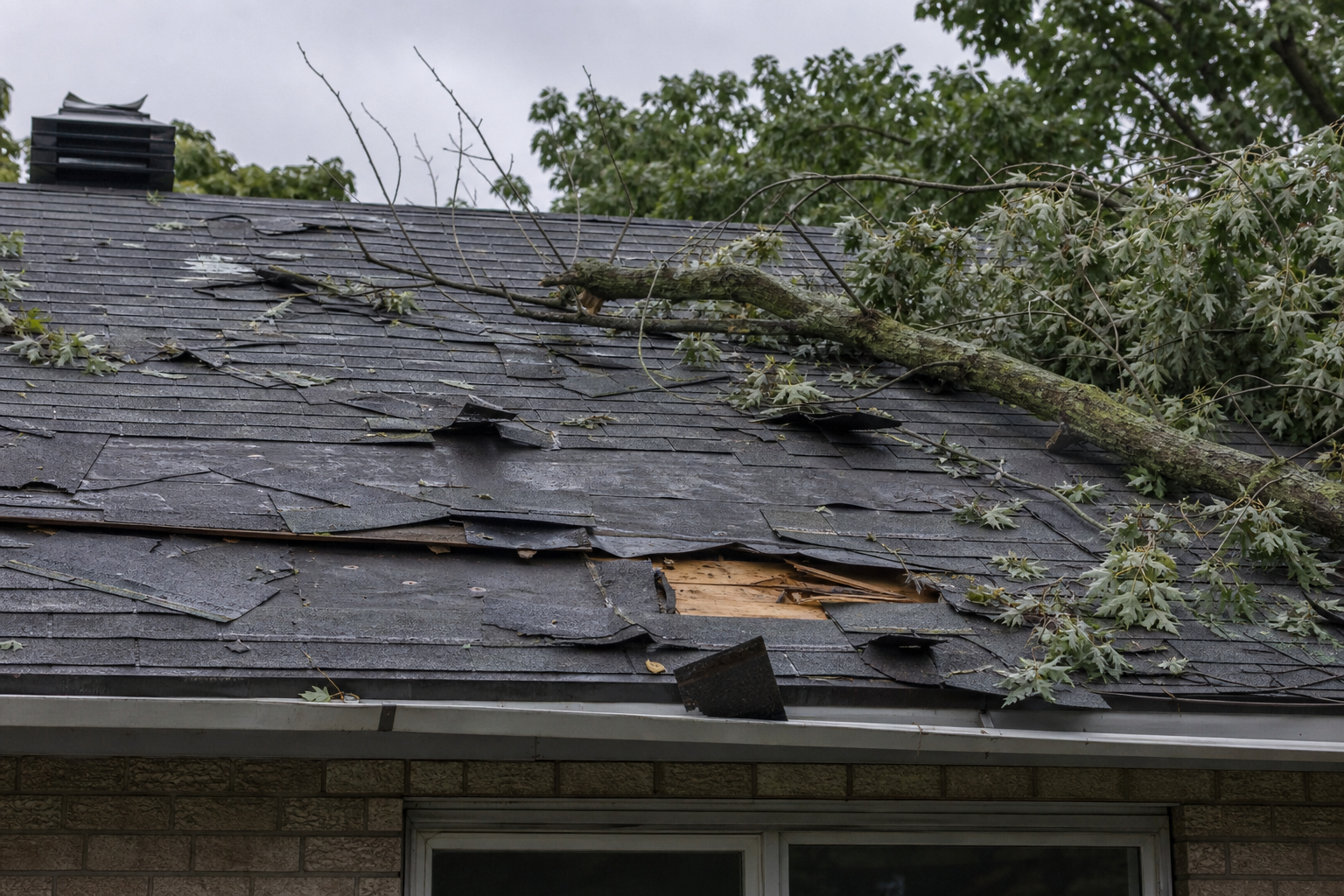
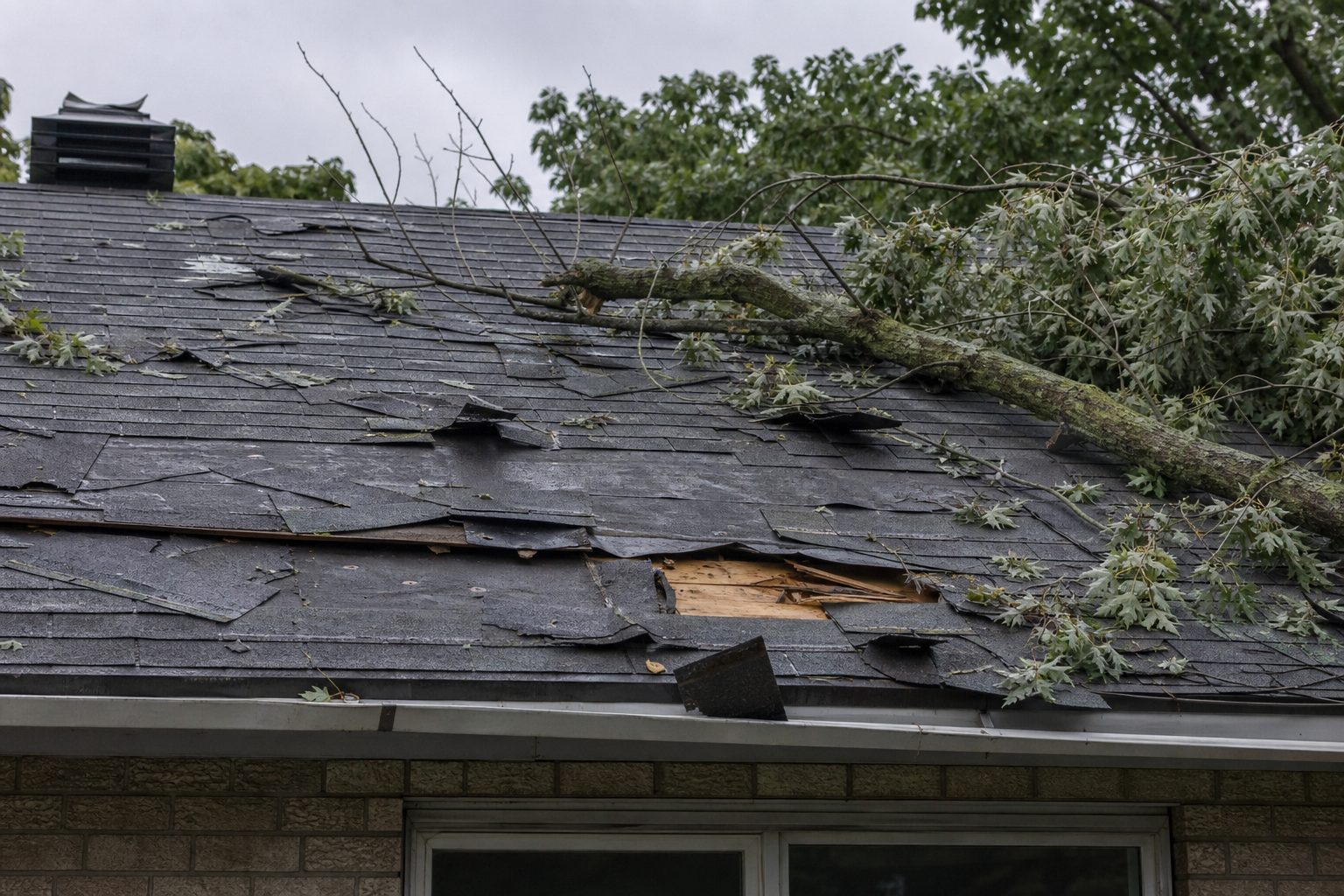
Shingles torn off by a storm are generally covered under standard policies.
Replacement cost or actual cash value
There are two types of coverage. Replacement cost covers the cost of replacing the roofing with a modern equivalent. Actual cash value deducts for age-related depreciation, which significantly reduces the payout for a twenty-year-old roof.
Some policies automatically switch to actual cash value once a roof reaches a certain age, or require proof of a recent inspection. Checking this clause before a loss occurs changes the conversation with the claims adjuster.
Proving maintenance: a homeowner's best ally
A documented maintenance record often overturns the presumption of wear and tear. A dated roof inspection report , annual photos, and invoices for minor repairs prove that the damage is indeed accidental.
The Quebec government considers preventive building maintenance to be central to building durability. The same principle applies to a single-family home: a functional gutter system and clear drains prevent most roof-related water backups.
Condos and rental properties: who insures what
In a condo, the roof is considered a common area and is covered by the syndicate's insurance, not the individual owner's policy. The owner's policy instead covers unit improvements, personal belongings, and civil liability. A leak from the roof therefore involves two insurance contracts, and the syndicate's deductible can be high.
In a rental property, the landlord insures the building and the tenant insures their belongings. Water damage that ruins a tenant's furniture is covered by the tenant's policy, unless the landlord's negligence is proven. Documenting when a water stain appeared and any notices sent prevents a long dispute between insurers later on.
For an owner-occupied Montreal plex, the policy must cover both the occupied and rented portions. Ensure the building's insurance amount reflects the actual reconstruction cost, which has risen along with the price of materials and labor.
Insurance and renovations: the license matters
Having roofing work done by someone without a valid RBQ license exposes the owner to two risks: limited recourse in the event of poor workmanship, and grounds for exclusion if damage results from that work. The Régie du bâtiment du Québec regulates contractor licenses, and verifying one takes two minutes before signing the contract.
Compare coverage before renewal
The best time to correct insufficient coverage is at annual renewal, not the day after a loss. Three elements in the contract deserve careful reading: the list of water damage endorsements, the amount of each deductible, and the settlement method applied to roofing materials.
Also ask your representative if the policy imposes a maximum age for the roof, requires periodic inspections, or mandates corrective work following a claim. These conditions rarely appear in the summary provided to the client, yet they change the amount received after a loss.
Planned restoration, detailed on our page about the cost to replace a roof, is often less expensive than the sum of deductibles and denied claims accumulated on a roof at the end of its life.
Frequently asked questions