Yes, you can replace a roof in Montreal during winter, but not with just any material or at any temperature. The industry standard in Quebec is not to install asphalt shingles below 5 °C, whereas torch-applied elastomeric membrane can still be installed for much of the cold season.
Key points
- At the Rivière-des-Prairies station on the island of Montreal, the average temperature in January is -10.3 °C and the average high peaks at -5.5 °C, well below the shingles' sealing threshold.
- The average high only climbs back above 5 °C in April (11.6 °C), which leaves about five months per year when installing asphalt shingles becomes tricky.
- The AMCQ recommends avoiding the installation of asphalt shingles between December 15 and March 15 and below 5 °C, unless manually bonded with plastic cement.
- Montreal receives an average of 158.9 cm of snow per year, including 40.5 cm in December and 39.8 cm in January: the work surface must be cleared of snow before starting any work.
- Roof repair is still construction work: the contractor must hold a valid RBQ license , in winter as in summer.
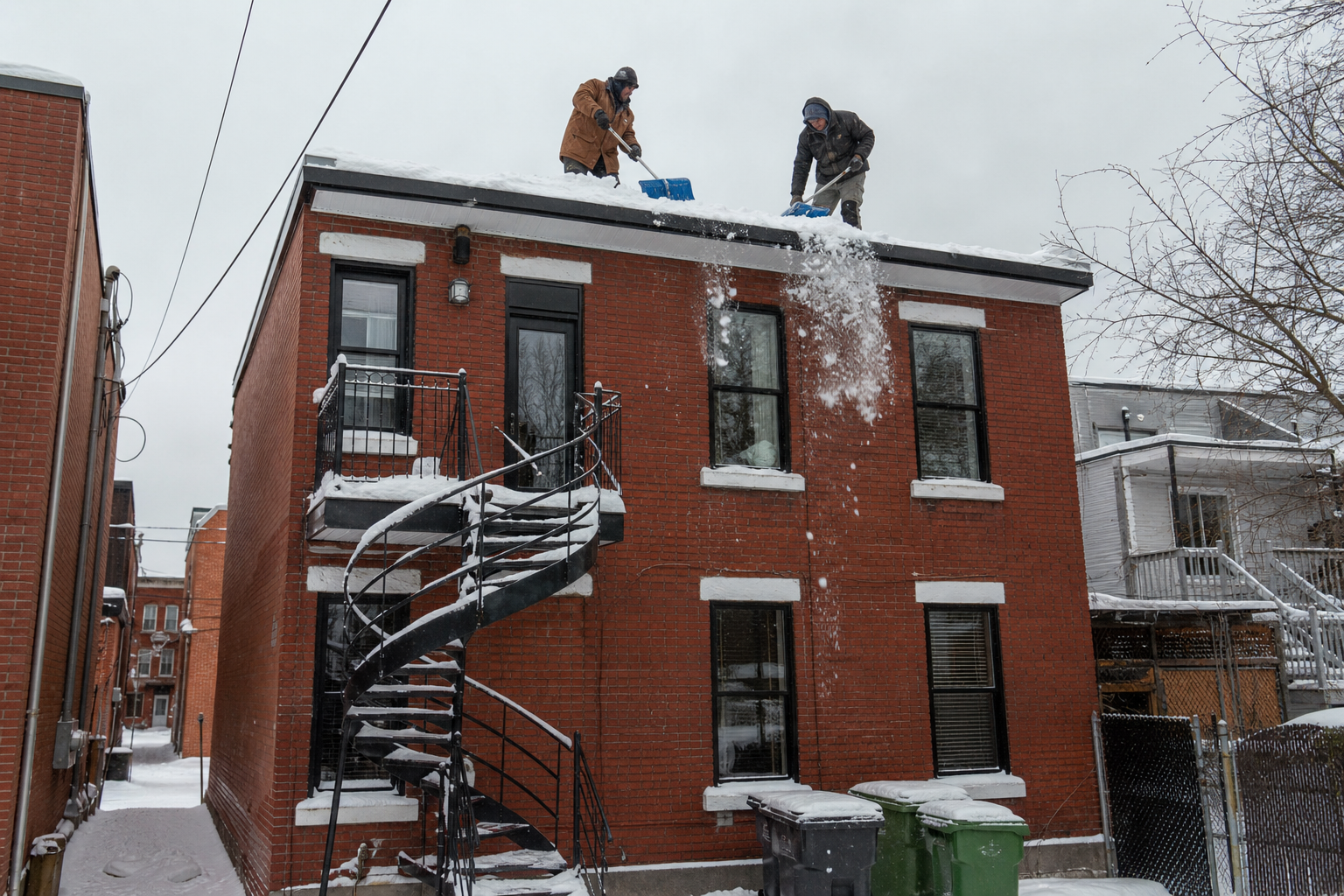
Snow removal precedes any roofing project in winter in Montreal.
How cold weather really changes a roofing project
Cold weather doesn't stop roofing work, but it does change the chemistry of the materials. Asphalt shingles have a self-adhesive strip that needs heat from the sun to fuse with the next row. Below 5 °C, this strip no longer bonds within a reasonable timeframe, and a roof covering that isn't sealed will lift with the first winter gust.
The second effect is mechanical. Cold shingles become brittle: they crack when nailed, break when cut, and do not handle being bent over a ridge well. A roofer working in cold weather must keep the bundles warm until installation and slow down the pace, which extends the project timeline.
Finally, the work surface itself is different. A damp, frosty, or snow-covered deck cannot receive a self-adhesive membrane or underlayment, and the safety of the crews comes before productivity.
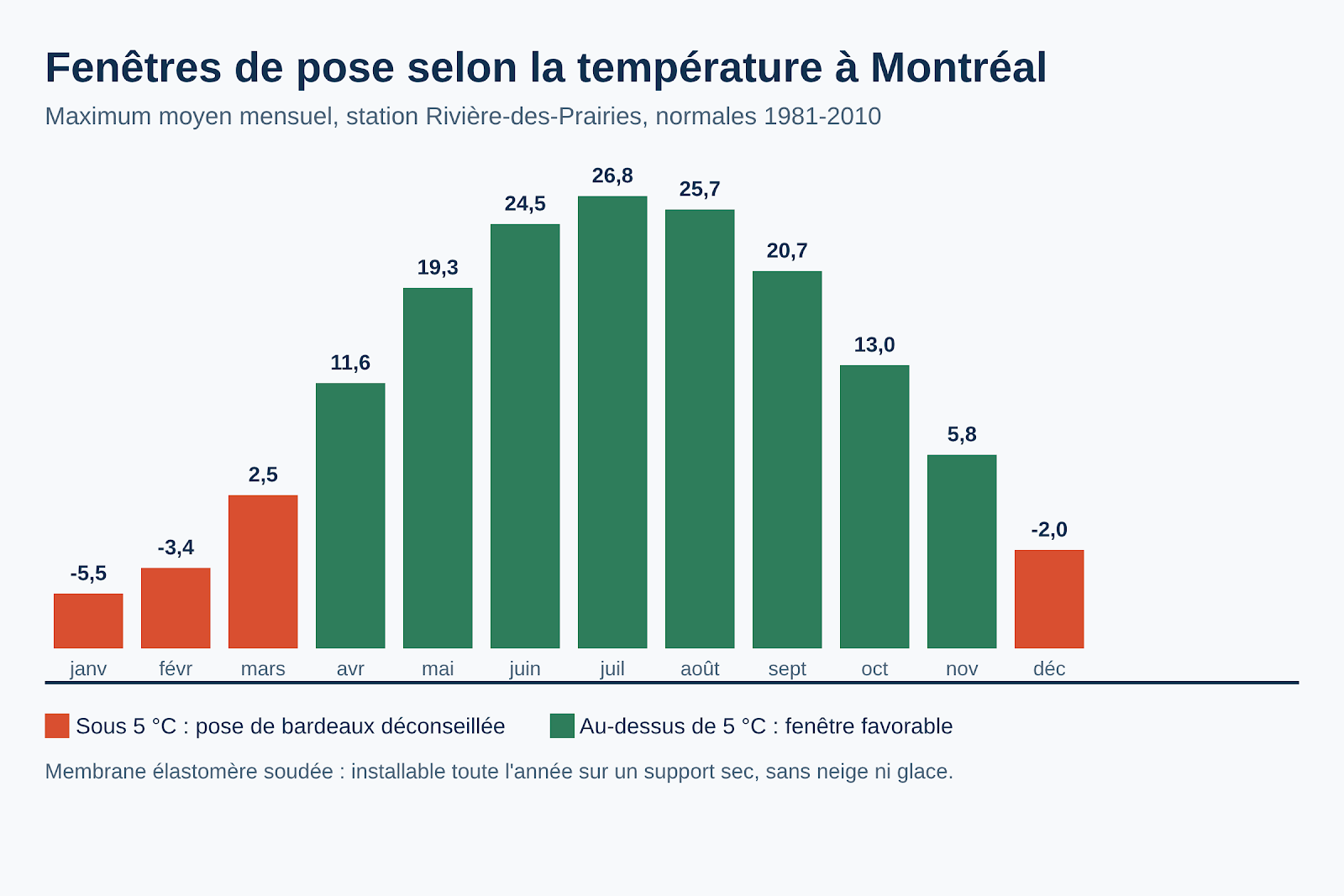
Average monthly maximum, Riviere-des-Prairies station, 1981-2010 normals.
Materials that can handle winter
Not all roofing materials react the same way to low temperatures.
This is why elastomeric membrane roof replacement dominates winter projects on Montreal flat roofs, while asphalt shingle installation is better planned from spring to autumn.
Emergency repairs: winter waits for no one
Choosing the season for a planned roof renovation is one thing, but dealing with a water leak in February is another. A torn membrane, flashing ripped off by a gust of wind, or ice buildup forcing water under the roofing material cannot wait until May.
In such cases, the right approach is a temporary winter repair, followed by a complete replacement the following season. An emergency roof repair aims to stop the water, not redo the entire system. The owner must document the incident, photograph the damage, and keep all invoices for their insurer.
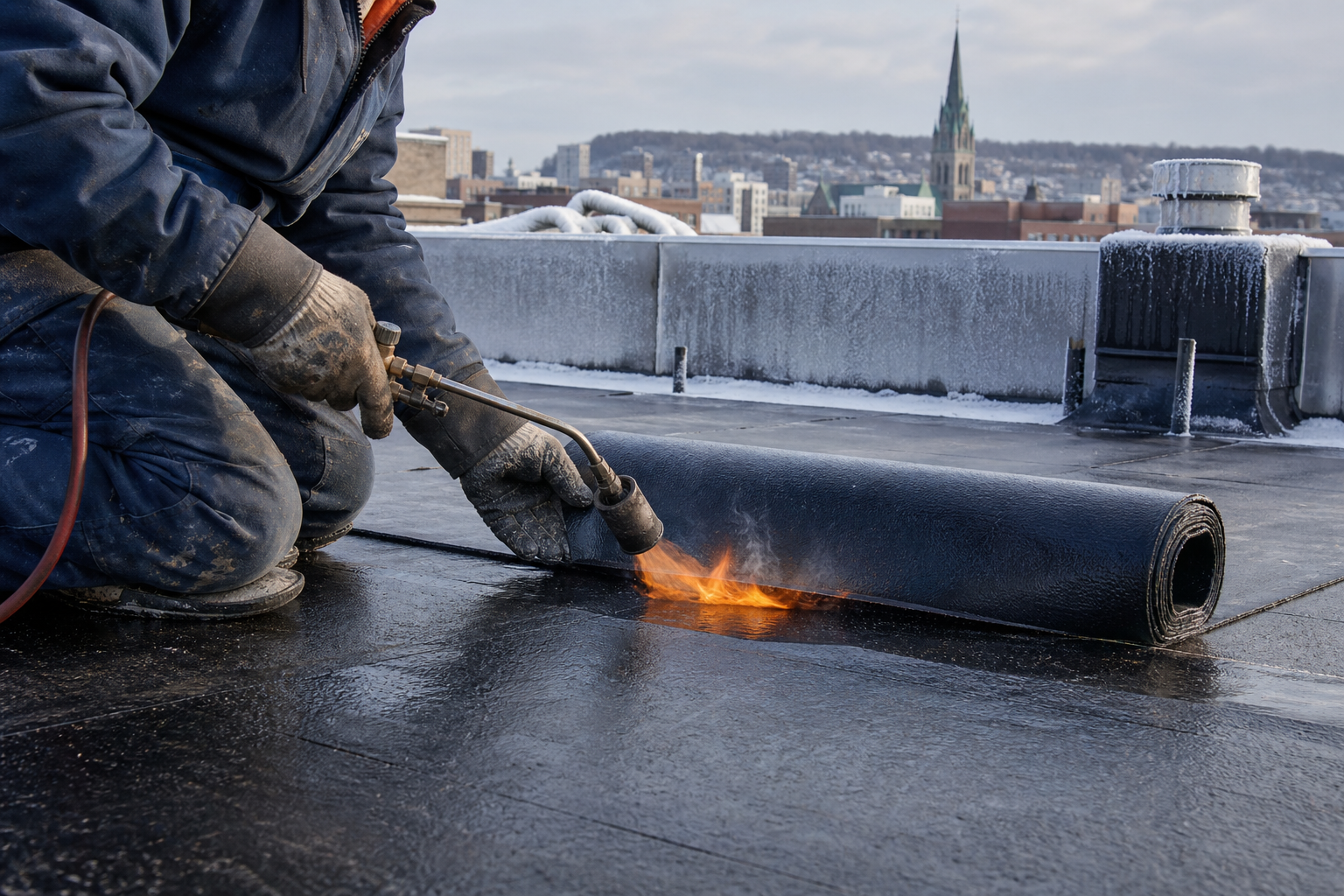
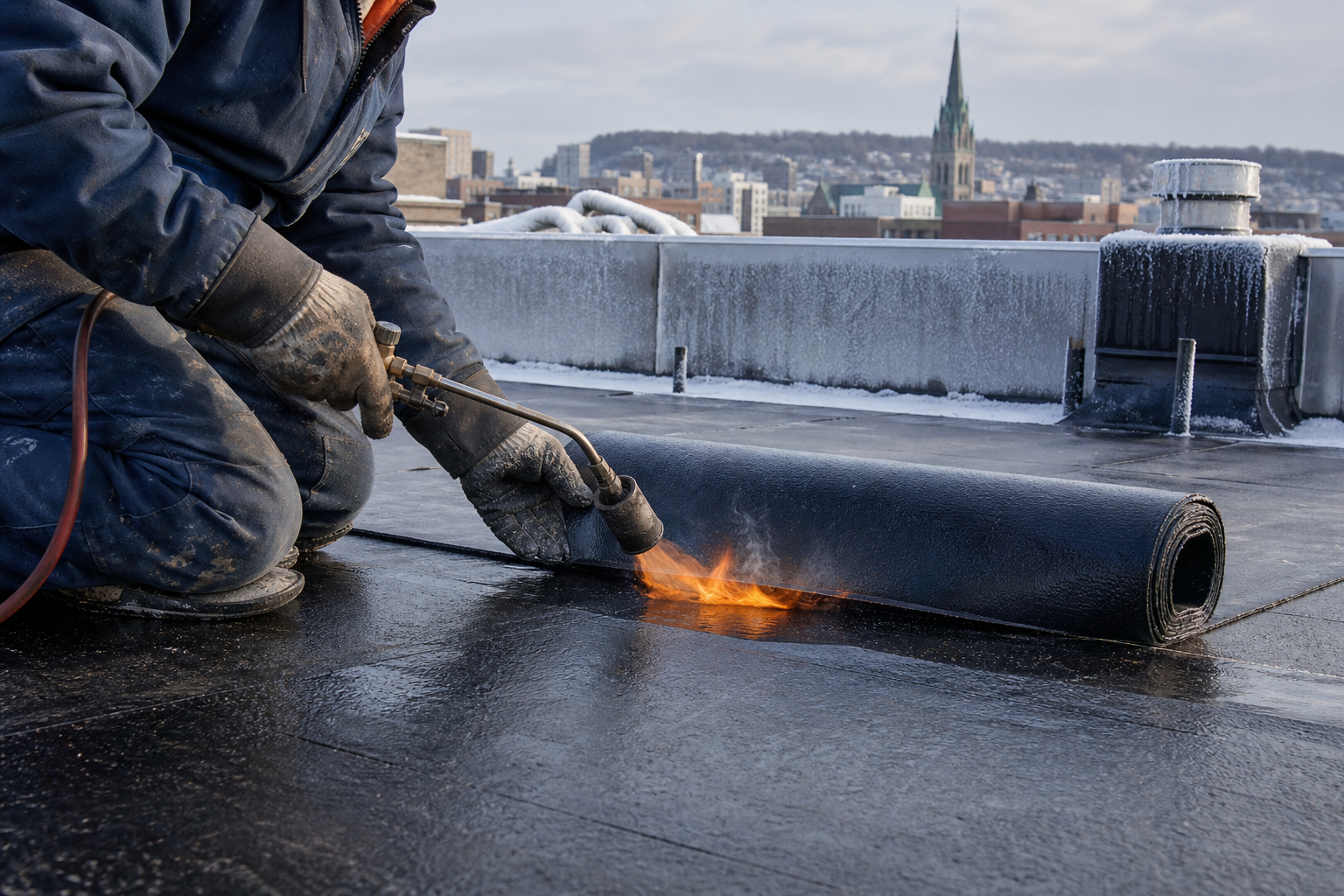
Welded elastomeric membrane can still be installed on a dry surface during the cold season.
Snow, ice, and roof access
Before even discussing materials, we must talk about access. With nearly 159 cm of snow per year on the island, a roof can have several dozen centimeters of accumulation by the time the contractor arrives. Roof snow and ice removal then becomes the first step of the project, billed as an additional cost.
Snow accumulation that melts and refreezes at the roof edge also creates ice dams, which complicate the removal of the old roofing and hide the true condition of the roof deck.
Cost, lead times, and roofer availability
The time of year affects the order book. From June to October, crews are at capacity and lead times increase. In January and February, a commercial or flat roof project can more easily find an available crew, which can work in favor of a property owner in a hurry.
On the other hand, a winter project is rarely cheaper. Snow removal, handling, material protection, and reduced efficiency offset the availability. Price benchmarks by material are detailed on our page on roof replacement prices and materials.
The best season for roof replacement in Quebec
For a shingle roof, the ideal window is from late May to mid-October, when daytime temperatures stay above 10°C and the sealing happens naturally. Early autumn is often the best compromise: the days remain warm enough for bonding, and the crews are past the summer peak.
For a flat membrane roof, the window is much wider. A renovation project can be scheduled from March to December, provided there is a forecast of three dry days and a clean substrate.
Preparing the site before the roofers arrive
A well-prepared winter site loses fewer hours. The owner can clear truck access, free up a storage area for materials, and ensure a functional outdoor electrical outlet is available. On a flat roof, you must also locate the drains before the first snowfall, because a frozen drain turns spring melt into a pool.
Inside, protect what is under the attic. Removing old roofing causes dust and debris to fall between the joists, and the vibrations from nailing are transmitted to the ceilings. A simple plastic sheet over stored items prevents an unpleasant cleanup.
Finally, ask the contractor for their contingency plan in case of a storm: what type of temporary protection will be installed at night, and how much surface area will be opened per workday. This answer says a lot about their experience with winter projects.
How to decide in your case
The right decision depends on the actual condition of the system, not the calendar. A roof inspection helps decide between three scenarios: targeted repair now, complete replacement next season, or immediate replacement because the roof deck is compromised.
Three questions guide the choice. Is there an active leak? Has the roofing reached the end of its useful life? Does the structure show signs of sagging? A single yes is generally enough to justify quick action, even in January.
FAQ