Are you planning to repair your flat roof in Montreal? The color of your new roof is no longer a simple aesthetic choice in several districts. Some materials such as white roofs, gray roofs or green roofs are now required to reduce urban heat islands.
This regulation exists for a good reason, it brings concrete benefits, and compliance is easier than you might think. Whether you own a residential, commercial, or industrial building, here's what you need to know.
Key points to remember
• The white roofs reflect the sun's rays and reduce urban heat islands in Montreal
• The reduction in air conditioning costs can reach 41% in some commercial buildings
• The white membranes have a two to three times longer lifespan with conventional roofs
• Regulations vary from district to district, but the Trend extends across Montreal
What is a white roof and how does it work
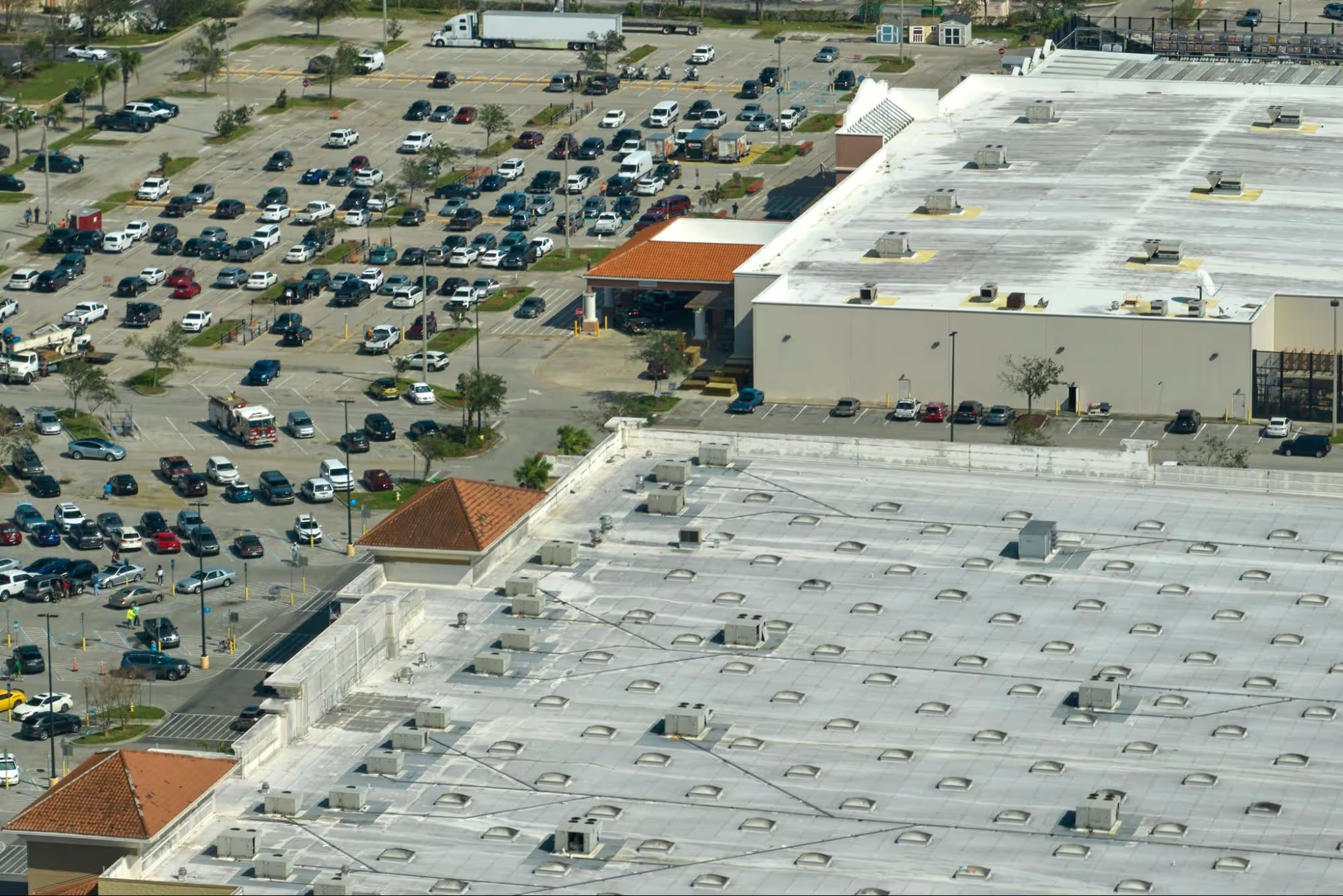
A white roof is a roof covered with a light-colored membrane or coating, usually white or pale gray. The principle? While a black roof absorbs up to 90% of the sun's rays, a white roof reflects them.
The white color reflects the sun's rays instead of letting the heat in in homes and buildings. It has been used for centuries in Mediterranean and South American countries to keep homes cool.
Montreal adopted her facing the increasingly hot summers. Most installations use white elastomeric membranes or reflective coatings applied to flat or low-sloped roofs. It has become standard on commercial buildings, and more and more common on residential buildings as well.
Why did Montreal adopt this regulation
Heat islands are a serious problem in urban areas. In Montreal, dark surfaces like asphalt and old black roofs absorb heat massively during the day. This accumulated heat makes Raise the temperature in densely populated neighborhoods, accelerates air pollution And Affects health residents — especially the elderly and children during heatwaves.
Since 2015, several boroughs including Rosemont—La Petite-Patrie and Côte-des-Neiges—Notre-Dame-de-Grâce have amended their urban planning regulations to counter this phenomenon. The objective: progressively transform the urban landscape by replacing absorbent surfaces with reflective surfaces.
The concrete advantages of white roofs
You will save on air conditioning
There reduction in air conditioning costs comes out on top. A white roof lowers the indoor temperature by several degrees in summer. For an air-conditioned building, this means energy saving up to 40%.
The non-air-conditioned buildings also benefit from interior comfort significantly improved during the hot months. Employees and residents benefit from more pleasant temperatures without seeing their electricity bills increase.
It lasts longer
The white membranes last longer than traditional black roofs — two to three times longer than a conventional roof. The most effective models show a high reflection rate.
This longevity can be explained simply: white roofs stay cooler, which reduces the expansion and contraction of materials caused by temperature variations. Result? Less heat stress on the membranes, so fewer cracks and much slower degradation.
Besides, it's a bit ironic when you think about it — we often associate white with something that gets dirty easily, but in the case of roofs, it's exactly the opposite. The white membranes more resistant to aging than their black equivalents.
A gesture for the environment
Beyond your building, white roofs contribute to reducing the carbon footprint global. Less air conditioning means less energy consumption and fewer greenhouse gas emissions.
White roofs are more effective to fight against global warming — they reflect significantly more light than green roofs.

What boroughs require white roofs
Several boroughs require certain materials when repairing or constructing a flat roof. Rosemont—La Petite-Patrie was among the first to adopt this regulation in 2011, followed by Cote-des-Neiges—Notre-Dame-de-Grâce, Mercier—Hochelaga-Maisonneuve, The South-West and Villeray—Saint-Michel—Parc-Extension.
An owner of a triplex on Masson Street recently explained to me that he had initially found the regulations binding, but that after a summer with his new white roof, he had noticed a marked difference in his top floor apartment. The sweltering heat of before? Disappeared.
For flat roofs, you need to install a white material, painted white or covered with a reflective coating Or of white gravel. The required solar reflectance index varies according to the district and the area of the roof.
The list of districts concerned continues to evolve — others may be added soon. Consult the City of Montreal website to know the specific requirements of your sector before undertaking work.
Common mistakes to avoid
Do not check local regulations
Starting work without checking the requirements of your district remains The most common error. The required solar reflectance index varies from 56 to 78 for flat roofs depending on the district.
A serious entrepreneur should inform you of these obligations. But the final responsibility belongs to you. A non-compliant construction site? Statement of offense and expensive fixes to be expected.
Choosing the wrong material
Not all white roofs are created equal. Some paints or coatings lose their effectiveness quickly if the quality is not there. Give priority elastomeric membranes recognized or certified coatings that meet solar reflectance index standards.
Neglecting maintenance
A white roof covered in dust, leaves, or dirt loses much of its effectiveness. Biannual cleaning and annual inspection: this is the minimum to maintain performance.
What you need to do before starting your work
If you are building a new building or doing a complete renovation, the regulations strictly apply — consult the site of your district and get a permit. For roofs over 300 m², the requirements are even more stringent: check the minimum IRS requirements (often 56 or more).
Minor repairs? No immediate obligation, but plan for compliance during the next major repair.
More than just an obligation
White roofs are much more than a check box on a permit. Montreal is facing increasingly hot summers — think of the heatwaves in July where the mercury exceeds 30 degrees day after day. Each white roof installed in Rosemont, Hochelaga or the Plateau contributes to lowering the temperature in the neighborhood.
The impact is real and measurable. The energy savings you achieve come with a positive effect on your surroundings and on the quality of the air that everyone breathes.
Do you have questions?
Are you unsure about the specific requirements of your district or about the choice of materials? Our team can help you clarify the options available and recommend solutions that are right for your situation and budget.
Contact us to discuss your white roof options.
FAQ
Sources and references
The information in this article comes mainly from the site of the City of Montreal, the Center for Urban Ecology and Studies on the Energy Efficiency of Reflective Roofs:
- City of Montreal - Roofs And Renovating a flat roof
- University of Montreal - Roofing and sustainable development
- Construction 21 - White roofs and air conditioning
- PDF document from the City of Montreal on white roofs